
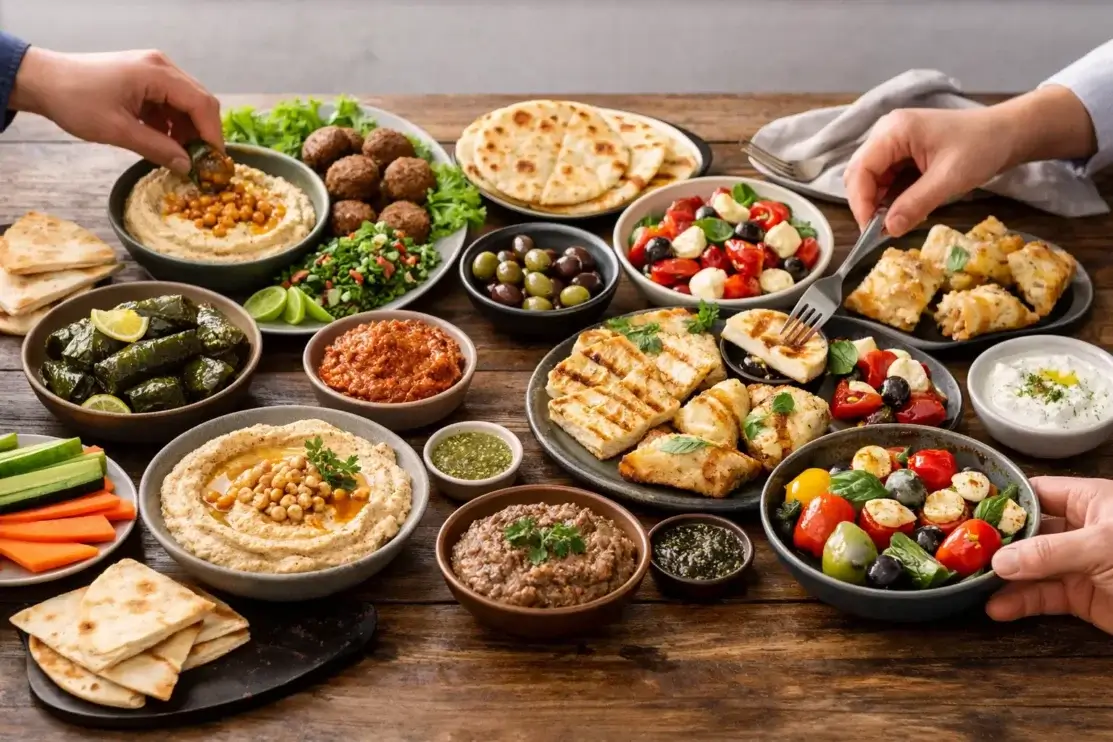
A mezze table should make everyone feel invited before the first plate is passed. That is why the difference between vegan vs vegetarian mezze matters: two spreads can look equally colorful and generous, yet one may include yogurt, cheese, butter, or honey while the other does not. Knowing what is in each dish helps hosts plan with care and lets diners enjoy the meal with confidence.
Mezze is built for sharing. It brings together dips, salads, vegetables, breads, pickles, and warm small plates, encouraging people to taste a little of everything and stay at the table a little longer. With a few thoughtful choices, it can be one of the most naturally inclusive ways to gather.
Vegan vs Vegetarian Mezze: The Real Difference
Vegetarian mezze contains no meat, poultry, or seafood. It may still include dairy and eggs, which are common in Mediterranean and Levantine cooking. A vegetarian spread can feature creamy labneh, salty feta, halloumi, yogurt-based sauces, or pastries brushed with butter.
Vegan mezze goes further by excluding all animal-derived ingredients. That means no dairy, eggs, butter, ghee, yogurt, cheese, or honey. A dish may be vegetable-forward and still not be vegan, so the details matter. Roasted eggplant, for example, may be finished with yogurt; grape leaves may be prepared with butter; and a vinaigrette may contain honey.
Neither approach is more generous than the other. The best choice depends on who is gathering around the table. A vegetarian menu can be a beautiful fit for guests who enjoy dairy, while a vegan mezze spread offers a welcoming option for mixed groups, plant-based diners, and anyone avoiding dairy or eggs.
Mezze Dishes That Are Often Vegan
Many beloved mezze dishes are vegan by tradition or can be made vegan without losing their character. Hummus is the clearest example: chickpeas, tahini, lemon, garlic, and olive oil create a dip that is naturally rich and satisfying without dairy. When made from scratch with quality ingredients, it needs no shortcuts.
Baba ghanoush is often vegan as well, especially when its smoky eggplant is blended with tahini, lemon, and garlic. Still, recipes vary. Some kitchens add yogurt for extra creaminess, so it is always worth asking.
Fresh salads tend to offer plenty of vegan possibilities. Tabbouleh, made with parsley, tomato, mint, lemon, and olive oil, is traditionally plant-based. A chopped salad of cucumber, tomato, herbs, and lemon can be vegan too, as can olives, pickled turnips, marinated beans, roasted peppers, and simple seasonal vegetables.
Falafel is commonly vegan, but preparation matters. The chickpea or fava bean mixture itself is usually plant-based. The question is whether it shares a fryer with animal-based foods or is served with a yogurt sauce. For guests with allergies or strict dietary needs, those kitchen details are just as meaningful as the ingredient list.
Muhammara, a deeply flavorful dip made with roasted red peppers, walnuts, pomegranate molasses, and spices, can also be vegan. Traditional versions often include breadcrumbs, however, which means it may not be gluten-free. This is a helpful reminder that vegan and gluten-free are different needs. A dish can meet one dietary preference without meeting the other.
Where Vegetarian Mezze Adds Dairy and Eggs
Vegetarian mezze often brings a creamy, tangy layer to the table. Labneh, a strained yogurt spread, is a classic choice with olive oil and herbs. It is vegetarian, but not vegan. The same is true for feta-topped salads, halloumi, and yogurt sauces served alongside vegetables or falafel.
Pastries require a closer look. Spinach pies, cheese-filled pastries, and savory baked goods may be vegetarian, yet their dough can contain butter or eggs. Even a vegetable filling does not automatically make a pastry vegan.
Some dishes also live in the middle, depending on the recipe. Vegetarian kibbeh may be made with bulgur, nuts, and spices, but it could be brushed with butter before baking. Stuffed grape leaves may be filled with rice and herbs but cooked in a broth that is not vegan. Asking a simple question protects the guest and honors the cook’s work rather than making assumptions about either.
How to Build a Mezze Spread Everyone Can Enjoy
For a group with different dietary preferences, start with a vegan foundation and add vegetarian elements separately. This keeps the center of the table abundant while giving dairy-loving guests options they can enjoy without making plant-based diners navigate around every dish.
A balanced spread can begin with hummus, baba ghanoush, a bright herb salad, olives, pickled vegetables, and warm roasted potatoes or cauliflower. Add crunchy vegetables such as cucumbers, radishes, carrots, and bell peppers for dipping. Then place labneh, feta, or halloumi in their own clearly marked dishes for those who want them.
Bread deserves the same attention as the dips. Traditional pita is often vegan, but not always gluten-free. For a group that includes gluten-free guests, offer a dedicated gluten-free option and avoid placing it directly against breads that contain wheat. The same care applies to serving utensils. One spoon per dish prevents dairy or gluten from traveling into food that was prepared for a specific need.
At Levant Los Angeles, this kind of consideration is part of the hospitality. Food can be full of flavor, rooted in tradition, and made with a clear understanding of what guests need to feel cared for. A fully gluten-free, soy-free kitchen approach can be especially reassuring for diners who are used to having to ask multiple questions before they order.
Questions Worth Asking Before You Order or Serve
The word “vegetarian” is useful, but it does not tell the whole story. If you are ordering mezze for a gathering, ask whether a dish contains dairy, eggs, butter, honey, or meat-based stock. For gluten-free diners, ask about breadcrumbs, bulgur, pita, shared fryers, and cross-contact during preparation.
It also helps to ask whether sauces are served on the side. A plate of roasted vegetables may be vegan until it arrives under a yogurt drizzle. Serving sauces separately gives each guest more choice and preserves the dish’s flexibility.
For catering or larger tables, labeling is a small gesture with a big payoff. Mark dishes as vegan, vegetarian, gluten-free, or containing nuts. Clear labels let guests relax, return for seconds, and focus on the conversation instead of trying to identify every ingredient.
Flavor Does Not Need Dairy to Feel Complete
One reason vegan mezze works so beautifully is that Levantine food has always known how to build depth through plants. Tahini brings body and a gentle nuttiness. Olive oil carries herbs and spices. Lemon wakes up beans and vegetables. Garlic, toasted nuts, pomegranate molasses, sumac, mint, and roasted peppers give a table contrast and warmth.
Dairy can certainly have a place in vegetarian mezze, but it is not the only route to richness. A well-seasoned vegan spread feels complete because it balances creamy, crisp, smoky, bright, salty, and sweet elements. Think smooth hummus beside sharp pickles, charred eggplant beside fresh herbs, and warm falafel beside a cool lemony salad.
The most welcoming mezze table is not defined by what it leaves out. It is defined by the care behind every dish, the clarity around ingredients, and the pleasure of passing something delicious to the person beside you.