
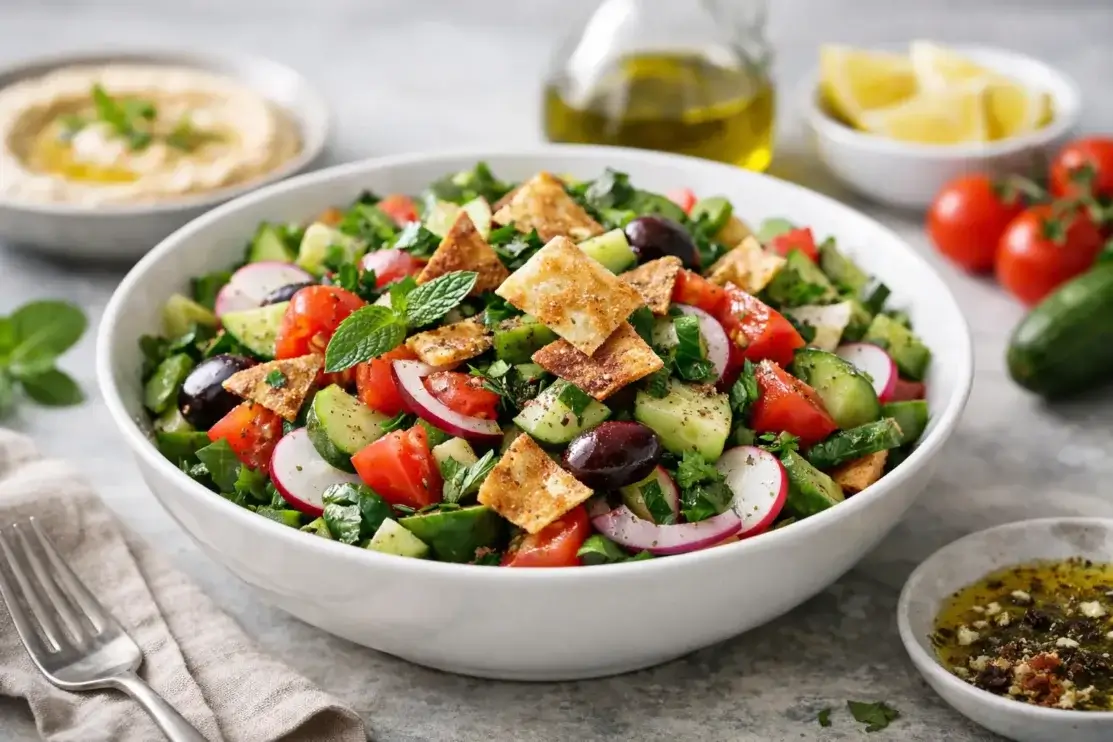
A good fattoush does not taste like an afterthought salad served on the side. It wakes up your palate from the first bite – crisp lettuce, cool cucumber, juicy tomato, sharp radish, fresh herbs, tart sumac, and a dressing that feels bright rather than heavy. If you have ever wondered what makes fattoush salad so refreshing, the answer is not one ingredient. It is the way texture, acidity, herbs, and freshness all meet at once.
That balance is what has made fattoush such a lasting favorite across Levantine cooking. It feels generous and lively, but never overwhelming. It satisfies without weighing you down, which is exactly why so many people come back to it, especially when they want a meal that feels both nourishing and energizing.
What makes fattoush salad so refreshing in the first place?
Fattoush is refreshing because it is built around contrast. Many salads lean on one note – creamy, crunchy, sweet, or savory. Fattoush works differently. It gives you cool vegetables, fragrant herbs, citrusy dressing, and crisp pieces of bread in the same forkful. That variety keeps each bite interesting and clean.
The vegetables do a lot of the work. Romaine or other crisp greens bring snap and water content. Cucumbers cool everything down. Tomatoes add juiciness and a little sweetness. Radishes bring a peppery edge that keeps the salad from tasting flat. None of these ingredients are rich on their own, so the overall effect stays light.
Then there is the dressing. Fattoush is usually dressed with olive oil, lemon, and sumac, sometimes with a touch of pomegranate molasses depending on the house style. Lemon gives immediate brightness. Sumac adds a tart, gently fruity tang that feels more layered than plain acidity. Olive oil rounds it out without turning the salad heavy.
The role of herbs and why they matter more than people think
Fresh herbs are one of the biggest reasons fattoush tastes so alive. Parsley and mint are common, and they do more than add color. Parsley brings a clean, green flavor that sharpens the vegetables. Mint cools the palate and leaves a fresh finish that lingers after each bite.
This matters because refreshing food is not just about temperature. It is also about how a dish leaves your mouth feeling. Heavy dressings and cooked ingredients can coat the palate. Fresh herbs do the opposite. They keep flavors lifted and clear.
That is part of why scratch-made fattoush tends to stand out. When herbs are chopped fresh and added at the right moment, they taste vibrant. If they sit too long or are used sparingly, the salad loses some of its spark.
Crisp pita changes the texture completely
One of fattoush’s signatures is its toasted or fried pita. At first glance, bread might not sound like the thing that makes a salad refreshing. In practice, it helps create the contrast that makes the whole dish feel more satisfying.
The pita adds crunch in a different way than lettuce or radish. It also absorbs some of the lemony dressing, so you get crisp edges with a little tang. That mix of airy crunch and bright seasoning makes each bite feel fuller without becoming dense.
There is a trade-off here. If the pita sits too long after dressing, it softens. Some people enjoy that slightly soaked texture, while others prefer the bread very crisp. It depends on how the salad is prepared and how quickly it is served. The best fattoush usually keeps enough crunch to stay lively while still letting the bread absorb flavor.
Sumac is small, but it changes everything
If there is one ingredient that gives fattoush its unmistakable personality, it is sumac. This deep red spice has a tart, citrusy quality that makes the salad taste brighter without adding more liquid. That is important because too much lemon juice can make a salad watery or harsh. Sumac brings acidity with a softer hand.
It also gives fattoush a grounded Levantine identity. The flavor is subtle enough to support the vegetables, but distinct enough to make the salad memorable. Without sumac, you can still have a good chopped salad. With it, you get something that tastes unmistakably like fattoush.
For diners who value clean eating, sumac is also a reminder that bold flavor does not need to come from processed sauces or excess salt. Traditional ingredients can create depth in a way that feels both simple and complete.
Why fattoush feels light, even when it is filling
A dish can be satisfying without being heavy, and fattoush is a perfect example. That comes down to water-rich produce, high-acid dressing, and the absence of creamy or overly rich components. You feel nourished, but not slowed down.
This is especially appealing for people who want meals that support the way they live day to day. When food is made with fresh vegetables, herbs, and straightforward ingredients, your body tends to register it differently. There is less fatigue after eating, less of that weighed-down feeling, and more of the clean satisfaction that comes from a balanced plate.
Of course, not every fattoush is equally light. Some versions use more oil or sweeter dressing. Others overload the bread and underplay the vegetables. The most refreshing versions keep the produce at the center and use dressing with intention rather than excess.
Freshness depends on ingredient quality
Because fattoush is so simple, there is nowhere for mediocre ingredients to hide. Wilted herbs, mealy tomatoes, or watery cucumbers will show up immediately. This is one reason the salad feels especially good when it is made with care.
High-quality produce has natural sweetness, snap, and aroma. Organic greens taste cleaner. Ripe tomatoes bring balance to the acidity. Fresh cucumbers offer real crunch instead of a spongy texture. When each ingredient is chosen well, the salad does not need much manipulation.
That philosophy resonates with health-conscious diners for a reason. Ingredient integrity is not a trend. It is the difference between food that merely looks fresh and food that genuinely feels restorative. At places like Levant Los Angeles, where scratch cooking and dietary inclusivity matter, that kind of care is part of what makes a simple dish feel deeply satisfying.
Fattoush works because it is adaptable
Another reason fattoush remains so refreshing is that it can shift with the moment. On a warm day, it feels cooling and crisp. As part of a larger spread, it cuts through richer dishes like hummus, falafel, or grilled proteins. As a light lunch, it stands on its own.
It also adapts well to different dietary needs without losing its identity. For gluten-free diners, the pita component can be adjusted or replaced while keeping the bright vegetables, herbs, and sumac-forward dressing at the center. That flexibility matters when you want food to be inclusive without feeling compromised.
Still, there is a balance to protect. Remove too much crunch or acidity, and the salad can lose the very qualities that make it special. The goal is not to reinvent fattoush beyond recognition. It is to preserve the interplay of freshness, tartness, and texture that defines it.
More than a side salad
Fattoush has a way of making a meal feel more generous. It brings color to the table, but also relief. Against richer dishes, it resets your palate. On its own, it offers enough complexity to feel intentional rather than plain.
That may be the simplest answer to what makes fattoush salad so refreshing. It is not refreshing in a one-dimensional way. It is cooling, crisp, tart, herbal, and textured at the same time. It respects the appetite while still feeling light.
When a dish is built from real ingredients and balanced with care, freshness stops being a vague promise and becomes something you can taste immediately. Fattoush does that beautifully, and that is why it never goes out of style.
The next time you crave something that feels bright, clean, and genuinely satisfying, fattoush is a reminder that simple food made thoughtfully can be exactly what your body was asking for.