
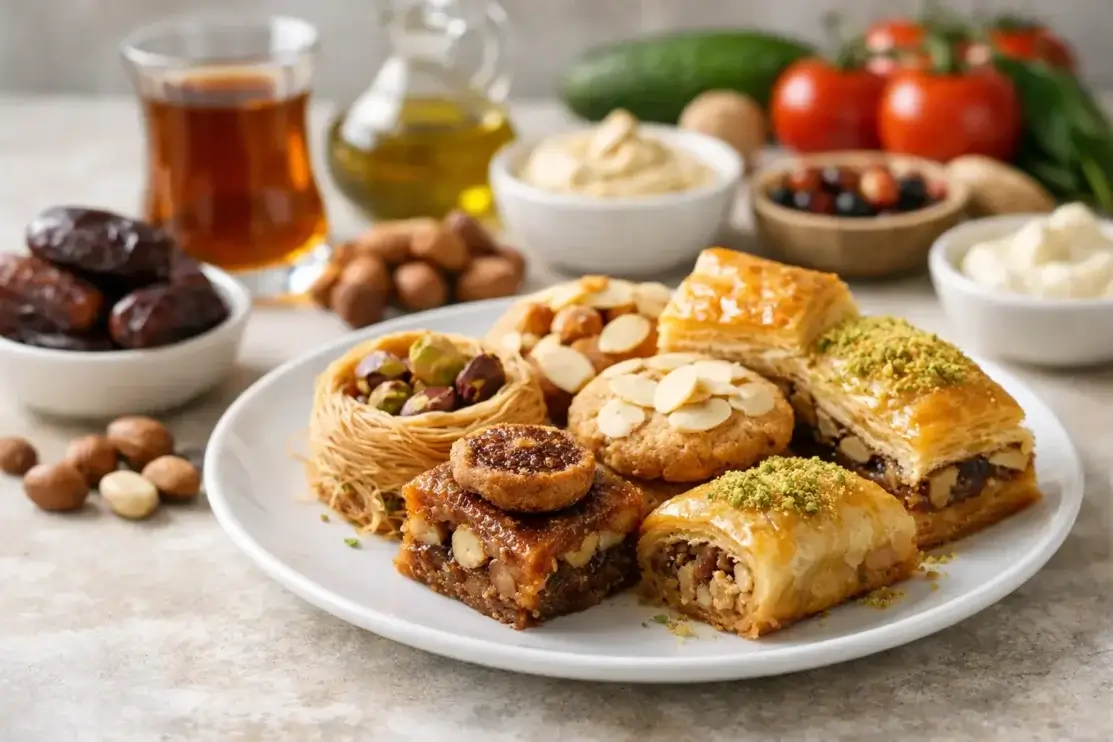
A great pastry should feel generous, not limiting. That is the real test with Mediterranean pastries for special diets – whether they still deliver the comfort, texture, and sense of celebration people come to this food for in the first place.
That matters even more in Mediterranean baking, where pastry is tied to memory as much as flavor. A sesame cookie with tea, a syrup-soaked semolina cake at a gathering, or a pistachio-filled bite shared after dinner carries emotional weight. When someone is gluten-free, vegan, soy-free, or managing allergies, the goal is not to make a pale substitute. It is to keep the pleasure, the welcome, and the cultural integrity intact while making the pastry accessible.
What makes Mediterranean pastries harder to adapt
Traditional Mediterranean and Levantine pastries often rely on wheat flour, butter or ghee, and sometimes dairy-based fillings. Phyllo is the obvious example, but it is not the only one. Many beloved pastries depend on gluten for stretch or structure, and on dairy for richness and tenderness.
That can make adaptation tricky. If you remove gluten without rethinking the whole recipe, the result is often dry, sandy, or fragile. If you remove dairy without rebuilding flavor, the pastry may lose the depth people associate with homemade baking. The best special-diet pastry does not just subtract ingredients. It rebuilds balance.
Sweetness is another place where shortcuts show. Mediterranean desserts are often assumed to be very sweet, but the best versions are usually more nuanced than that. Floral waters, citrus zest, toasted nuts, dates, and warm spices all create depth. That is helpful for special-diet baking because it means flavor does not need to depend on butter alone.
Mediterranean pastries for special diets start with the right traditions
Not every pastry needs to be forced into a new shape. Some Mediterranean sweets are naturally closer to special-diet friendly than others. Nut-based cookies, tahini cakes, date-filled pastries, semolina-style bakes, and flourless confections already offer a strong foundation.
This is where thoughtful Mediterranean baking shines. Almond flour, pistachios, walnuts, sesame, coconut, olive oil, and fruit syrups are not foreign to the region’s dessert traditions. They belong there. That makes it possible to create pastries that feel true to the cuisine while meeting modern dietary needs.
For gluten-free eaters, blends built around rice flour, almond flour, tapioca, or potato starch can work well, but only when the recipe is designed around them from the start. A cookie can be crisp and tender with nut flour. A cake can stay moist with olive oil and citrus. A bar layered with nuts and syrup can feel decadent without relying on conventional wheat dough.
For vegan guests, Mediterranean pastry has an advantage because many regional flavors are already plant-friendly. Orange blossom, rose, cardamom, cinnamon, sesame, and pistachio carry so much character that a pastry can feel complete even without dairy or eggs. Olive oil often gives a cleaner, more aromatic finish than butter, especially in cakes and tea pastries.
The ingredients that matter most
When people hear allergy-friendly, they sometimes expect compromise. In practice, ingredient quality matters even more when a recipe has fewer conventional crutches.
A good gluten-free pastry needs structure, but it also needs tenderness. That usually comes from a careful mix of starches and whole-food flours rather than one all-purpose substitute. Almond flour gives richness, but too much can make a pastry dense. Rice flour can lighten texture, but on its own it may taste chalky. Tapioca helps with elasticity, while potato starch can keep a crumb soft. The exact mix depends on whether the pastry is a cookie, cake, or filled dough.
Fats matter just as much. High-quality olive oil brings fruitiness and moisture. Coconut oil can help with body, though it needs a gentle hand so it does not overpower the pastry. Tahini is especially valuable in Levantine-inspired baking because it adds depth, softness, and a subtle savory note that balances sweetness.
Natural sweeteners also shape the final result. Honey is traditional in many pastries, but for vegan baking, date syrup and maple syrup can offer complexity. Date paste works beautifully in filled cookies and bars because it adds sweetness and texture at once. Citrus zest, floral waters, and spices then keep the pastry from tasting flat.
Texture is where trust is won
Most people who follow special diets have had at least one disappointing dessert. It looked beautiful, but the first bite told the truth.
Texture is often the reason. A pastry can be gluten-free and still feel luxurious, but only if the baker respects what each dessert is supposed to be. A shortbread-style cookie should snap lightly and then melt. A syrup cake should absorb moisture without turning gummy. A nut-filled bite should feel layered, not heavy.
That is why some classics adapt better than others. Baklava-style pastries, for example, are difficult to reproduce exactly without wheat phyllo. It can be done in inspired forms, but the result may be a reinterpretation rather than a replica. There is nothing wrong with that, as long as it is honest. By contrast, flourless pistachio cakes, tahini brownies, sesame cookies, and almond-orange cakes often adapt beautifully and can stand on their own without apology.
For guests with dietary restrictions, that distinction matters. People do not want to be told a pastry is “just as good” if it is clearly trying to mimic something it cannot be. They want something that tastes intentional.
How to choose pastries for different dietary needs
The phrase special diets covers a lot of ground, so a pastry that works for one guest may not work for another. Gluten-free is not the same as grain-free. Vegan is not the same as nut-free. Organic ingredients are meaningful, but they do not automatically make a dessert safe for someone with allergies.
That is why clarity matters more than trendy labeling. If you are choosing pastries for a family gathering, office event, or celebration, it helps to start with the strictest need at the table and work outward. A gluten-free and soy-free pastry may still contain dairy or nuts. A vegan pastry may still be made with wheat. A beautiful pistachio dessert may be a poor fit for an allergy-sensitive group even if it checks other wellness boxes.
The most welcoming pastry programs are the ones built with transparency. Diners should be able to ask simple questions and get clear answers about ingredients, cross-contact, and preparation. For many people, that kind of trust is what makes dessert feel joyful again.
Why scratch-made matters so much here
Special-diet pastries are only as good as the care behind them. Pre-made mixes and wholesale shortcuts can create uniformity, but they rarely create warmth. Scratch baking allows for nuance – less sugar when dates add sweetness, more citrus when a cake needs brightness, a different flour balance when weather or ingredient variation affects texture.
It also makes hospitality more personal. When a bakery is used to cooking with intention, dietary needs do not feel like an inconvenience. They feel like part of the welcome.
That is one reason many health-conscious diners in Los Angeles seek out bakeries and restaurants that build inclusivity into the menu from the beginning rather than treating it as an afterthought. At Levant Los Angeles, that approach is part of the point: food can be organic, gluten-free, soy-free, and allergy-friendly while still feeling abundant, celebratory, and rooted in real Mediterranean flavor.
What a truly satisfying pastry experience looks like
The best pastry for a special diet does not announce itself with limitation. It arrives fragrant with toasted nuts or citrus. It has a texture that feels cared for. It tastes like someone wanted you at the table.
That can mean a tender olive oil cake with pistachios, a date-filled cookie with just enough spice, or a sesame-rich bite that pairs perfectly with coffee. It can be elegant enough for a birthday dessert table and simple enough for a weekday treat. What matters is that it feels complete.
Mediterranean baking has always known how to turn humble ingredients into something generous. Nuts, seeds, fruit, spice, and good oil can do a lot when they are handled with respect. For people with dietary restrictions, that is good news. It means pastry does not have to be excluded from celebration. It just has to be made with more intention.
If you are seeking something sweet that fits your standards and still feels deeply comforting, look for pastries that were created for your needs from the start. That is usually where the real pleasure lives.