
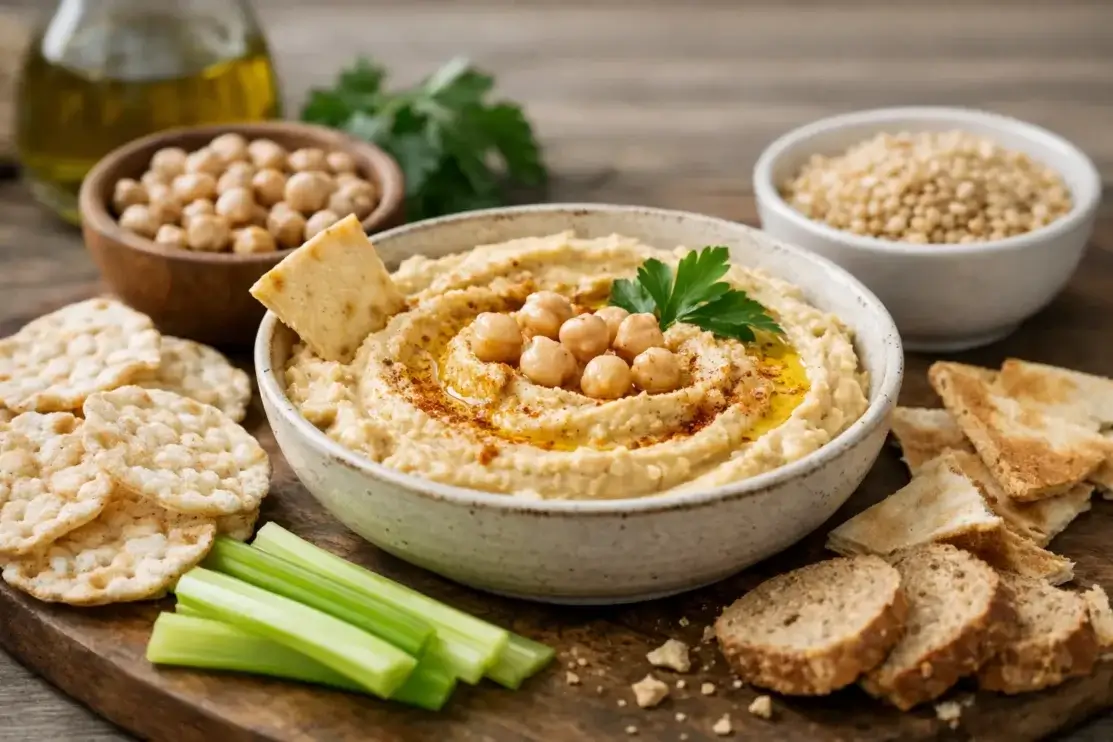
If you eat gluten free, hummus can feel like one of those foods that should be simple – and sometimes still raises questions. So, is hummus usually gluten free? In most cases, yes. Traditional hummus is made from chickpeas, tahini, lemon juice, garlic, olive oil, and salt, all of which are naturally gluten free.
That said, naturally gluten free and reliably safe are not always the same thing. The answer depends on how the hummus is made, what else is added, and whether it shares space with gluten-containing ingredients. For anyone managing celiac disease, gluten sensitivity, or food allergies, those details matter.
Is hummus usually gluten free in its traditional form?
Traditional hummus is one of the more straightforward foods in Mediterranean cooking. At its core, it is a blend of cooked chickpeas and tahini, brightened with lemon and balanced with garlic, salt, and olive oil. None of those ingredients contain wheat, barley, or rye.
That is why plain hummus is usually gluten free by recipe. If someone is making it from scratch with clean ingredients and no hidden additives, there is usually no gluten issue in the hummus itself.
This is part of what makes hummus such a helpful option for people looking for plant-based, satisfying food that still feels comforting and shareable. It offers protein, fiber, and richness without needing breadcrumbs, flour, or other common fillers.
When hummus is not gluten free
The tricky part is not the basic recipe. It is everything around the recipe.
Some store-bought or restaurant versions include flavor additions that introduce gluten. Roasted red pepper hummus, spicy hummus, or dessert-style hummus may sound safe, but seasoning blends, sauces, and processed mix-ins can change the picture. Malt vinegar, wheat-based thickeners, modified food ingredients, and flavorings are the kinds of details worth checking.
There is also the issue of cross-contact. A tub of hummus may start out gluten free, but if it is prepared in a kitchen that also handles pita, couscous, bulgur, or breaded items, gluten can be introduced during prep or service. Shared cutting boards, spoons, food processors, and serving stations can all create problems for highly sensitive diners.
This is where a simple ingredient list stops being enough. For some people, especially those with celiac disease, the safety of a food depends just as much on the kitchen practices as the recipe itself.
Ingredients to watch if you need hummus to be truly safe
Plain hummus is usually made from a short list of recognizable ingredients, so long labels can be a clue that extra caution is needed. Preservatives are not always a gluten issue, but flavor systems and stabilizers can be.
If you are reading a label, pay attention to anything that sounds vague or overly broad, especially natural flavors, seasoning mixes, starches, or thickening agents that do not clearly identify their source. Most brands now mark gluten-free products clearly, which can make shopping easier, but not every clean-looking hummus has that reassurance.
At restaurants, the hummus itself may be gluten free while the plate is not. This happens often. Hummus is naturally safe, then arrives next to warm pita, fried garnish, tabbouleh with bulgur, or a spoon that has touched another dish. If you avoid gluten for medical reasons, it helps to ask not only about ingredients, but also about how the dish is plated and served.
Store-bought hummus versus restaurant hummus
Neither option is automatically safer. It depends on the brand, the kitchen, and the level of transparency.
Store-bought hummus can be a good choice if it is clearly labeled gluten free and comes from a company that takes allergen control seriously. The advantage is consistency. You can read the package, review the ingredient list, and look for a gluten-free claim before buying.
Restaurant hummus can be just as safe, sometimes safer, if the kitchen makes it from scratch and understands cross-contact. The challenge is that many restaurants serve hummus in environments centered around wheat-based pita and shared prep areas. A beautiful hummus plate can still be risky if the same station handles bread all day.
For health-conscious diners, this is why ingredient integrity matters so much. Clean food is not only about what is included. It is also about the care behind preparation.
How to ask the right questions at a restaurant
You do not need to overcomplicate the conversation, but it helps to be specific. Asking, “Is the hummus gluten free?” is a great start, though it may not tell you everything you need to know.
A better conversation includes a few practical details: Is the hummus made in-house? Are any additives or seasoning blends used? Does it come into contact with pita or shared utensils? Can it be plated separately with vegetables or gluten-free sides?
Restaurants that are thoughtful about dietary needs usually appreciate clear questions. In fact, the way a team answers often tells you a lot. If they can explain ingredients and preparation with confidence, that is reassuring. If the answer is vague or rushed, it may be worth choosing something else.
For families and groups, this matters even more. Shared plates are part of the joy of Mediterranean dining, but they can also blur the line between safe and unsafe food. A single serving spoon moved from pita to hummus is enough to make a difference for some guests.
Is flavored hummus usually gluten free?
Sometimes yes, sometimes no. Flavor alone is not the issue. The source of the flavor is.
Hummus flavored with ingredients like roasted garlic, lemon, jalapeno, beets, or olives is often still gluten free if those ingredients are added in their whole form. The risk tends to increase when the flavor comes from packaged sauces, pre-mixed seasonings, crunchy toppings, or processed additions.
For example, buffalo-style hummus, dessert hummus, or anything with cookie, pretzel, or soy sauce-inspired notes deserves a closer look. Even caramelized onion hummus can be complicated if the seasoning includes hidden wheat-based ingredients.
If you are unsure, plain hummus is usually the safest choice. It is also the easiest version to verify because the ingredient list should be short and familiar.
What makes gluten-free hummus feel trustworthy?
Trust comes from clarity. A good hummus does not need much hiding behind it. When the ingredients are simple and the preparation is intentional, people with dietary restrictions can relax and enjoy the meal instead of analyzing every bite.
That is especially meaningful in a neighborhood restaurant setting, where food should feel generous and welcoming. For many gluten-free diners, peace of mind is part of hospitality. Being able to order hummus and know it was prepared with care changes the whole experience.
At places that build their menu around inclusive standards, hummus becomes what it should be from the beginning: nourishing, flavorful, and easy to share. That kind of attention is one reason diners across Los Angeles seek out kitchens that are fully gluten free rather than merely offering a few modified options.
So, should you assume hummus is gluten free?
It is better to say hummus is often gluten free, not automatically gluten free. The traditional recipe is naturally free of gluten, which is a strong starting point. But once you move into packaged foods, restaurant service, flavored varieties, and shared kitchens, there is more to consider.
If you eat gluten free by preference, that may be enough reassurance. If you have celiac disease or a strong sensitivity, it makes sense to verify the details. Check the label. Ask the kitchen. Notice what comes on the plate and how the food is handled.
Hummus can absolutely be a wonderful gluten-free staple. It is satisfying, wholesome, and rooted in ingredients that are simple by nature. The key is making sure the care behind it matches the simplicity of the recipe.
When food is prepared with real attention, questions like this become much easier to answer – and much easier to enjoy.