
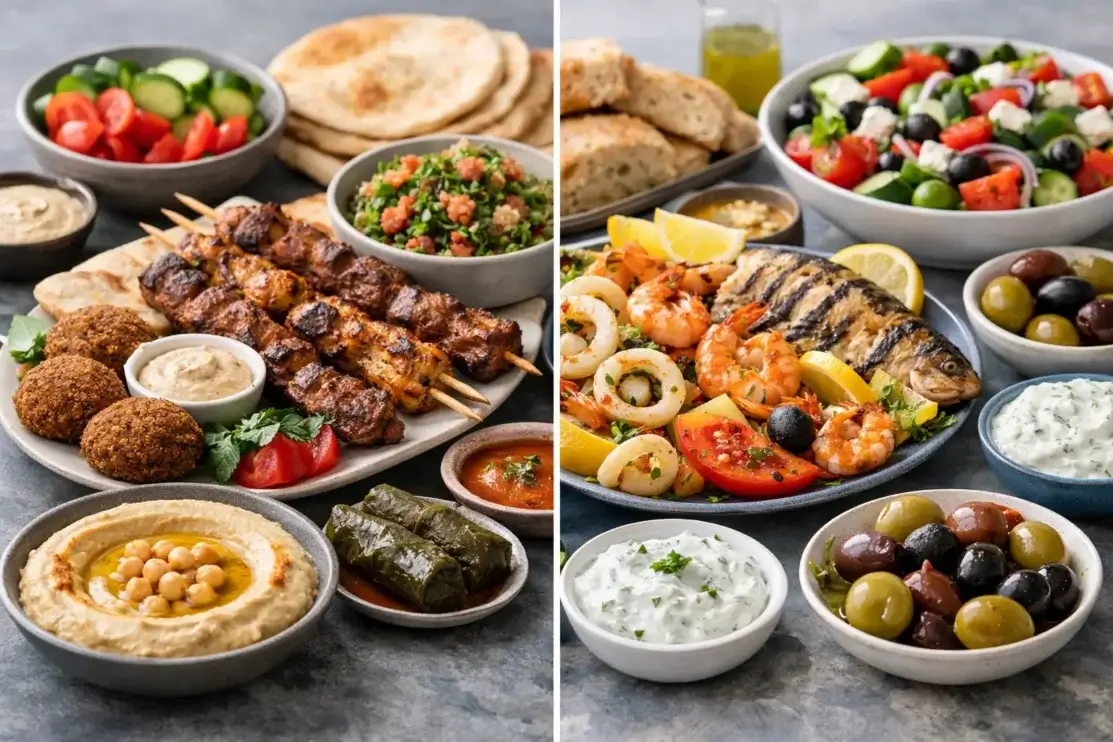
You see “Mediterranean” on a menu, expect hummus, grilled vegetables, maybe a bright salad, and then notice dishes that feel distinctly Lebanese. That confusion is common. Lebanese food vs Mediterranean food is not really a battle of one cuisine against another. It is a question of category versus tradition, and knowing the difference helps you order with more confidence, especially if you care about flavor, ingredient quality, and how your meal makes you feel.
Mediterranean food is a broad umbrella. It refers to cuisines from countries along the Mediterranean Sea, including Lebanon, Greece, Turkey, Italy, Spain, Morocco, and more. Lebanese food is one specific culinary tradition within that larger region. So when people compare Lebanese food vs Mediterranean food, what they are often really asking is this: what makes Lebanese cooking distinct from the broader Mediterranean style that many restaurants use as a catch-all label?
That distinction matters because broad labels can blur the details that make a meal memorable. They can also hide major differences in ingredients, preparation, and dietary fit. For diners who are gluten-free, vegetarian, vegan, allergy-conscious, or simply trying to eat with more intention, those details are not small.
Lebanese food vs Mediterranean food: the biggest difference
The simplest answer is that Mediterranean food describes a region, while Lebanese food describes a specific national and cultural cuisine. Mediterranean cuisine includes many traditions that share some overlap – olive oil, grains, legumes, herbs, seafood, vegetables, and grilled meats show up again and again. But the flavor profiles, staple dishes, and cooking habits can be very different from one country to the next.
Lebanese food has its own rhythm. It leans heavily on fresh herbs, lemon, garlic, olive oil, chickpeas, lentils, sesame, yogurt, and warm spices used with restraint rather than heaviness. It is generous without being overwhelming. The food often feels bright, layered, and balanced, with plenty of texture from creamy dips, crisp vegetables, tender grains, and baked pastries.
By contrast, a restaurant calling itself Mediterranean may borrow from multiple traditions at once. One menu might pair Greek salad with Turkish kebabs, Moroccan spices, and Lebanese hummus. That is not necessarily a bad thing. It can be delicious. But it is different from a menu rooted in one culinary heritage.
What makes Lebanese cuisine feel so distinct
Lebanese cooking is deeply tied to the Levant, where food is shaped by seasonality, hospitality, and the idea that a table should offer abundance. Meals often center around mezze, a spread of small plates that invite sharing and conversation. That experience is part of the cuisine, not just a serving style.
Classic Lebanese dishes include hummus, baba ghanoush, tabbouleh, fattoush, mujadara, kibbeh, grape leaves, shawarma, kafta, labneh, and manakish. Some of these appear on “Mediterranean” menus everywhere, but their roots and traditional preparation matter. Tabbouleh, for example, is often misunderstood in the US as a bulgur-heavy grain salad. In Lebanese cooking, it is really an herb-forward salad with parsley at the center, lifted by tomato, mint, lemon, and olive oil.
That attention to balance is one reason Lebanese food feels nourishing. Rich ingredients are offset by acid, herbs, and freshness. Even comfort foods often carry a sense of lightness when made from scratch with care.
Lebanese food vs Mediterranean food in flavor
If you are trying to tell the difference by taste, think first about brightness. Lebanese food often leads with lemon, parsley, mint, garlic, and olive oil. Sumac adds tang. Tahini brings nutty depth. Cinnamon and allspice may appear in savory dishes, but usually in a way that supports rather than dominates.
Mediterranean food as a broader category has no single flavor profile. Greek food may feature oregano, dill, feta, and briny olives. Turkish dishes may lean into Aleppo pepper, yogurt, and charcoal-grilled meats. Italian coastal cooking may highlight tomatoes, basil, seafood, and pasta. North African cuisines along the Mediterranean may bring cumin, coriander, preserved lemon, and deeper spice blends.
So if a dish is labeled Mediterranean, the flavor possibilities are wide. If it is Lebanese, there is usually a more defined culinary language behind it.
Ingredients overlap, but not in the same way
One reason people group Lebanese food under Mediterranean food is that the ingredient lists do overlap. Both often celebrate vegetables, beans, olive oil, nuts, herbs, yogurt, and grilled proteins. Both can support a healthy eating style. But ingredient overlap does not mean sameness.
Lebanese cuisine tends to build flavor through freshness and combination. Chickpeas become hummus with tahini, lemon, and garlic. Eggplant becomes baba ghanoush with smoke and sesame. Lentils and rice turn into mujadara, made satisfying with caramelized onions and simple pantry staples. The ingredients are humble, but the treatment is thoughtful.
A generic Mediterranean menu may use similar building blocks, but the final dishes could pull from entirely different traditions. You might see couscous from North Africa, tzatziki from Greece, falafel from the Levant, and grilled salmon with Italian-style herbs on the same page. Again, that mix can work well. It just should not be mistaken for one singular cuisine.
Is Lebanese food healthier than Mediterranean food?
This is where the answer depends on how the food is prepared.
Mediterranean eating is often praised for being heart-healthy because it emphasizes vegetables, legumes, olive oil, whole foods, and moderate portions of animal protein. Lebanese food fits comfortably within that pattern. In many cases, it embodies it beautifully.
But neither label guarantees a healthy meal on its own. Fried foods, refined grains, sugary desserts, and heavy portions can show up in both. A plate of fresh tabbouleh, hummus, lentils, and roasted vegetables will feel very different from a plate built around fried appetizers and oversized pita wraps.
For health-conscious diners, the better question is not whether Lebanese food or Mediterranean food is healthier in theory. It is whether the restaurant prepares dishes from scratch, uses clean oils and fresh produce, and makes dietary needs easy to navigate. That is where quality really shows.
For people managing gluten sensitivity, food allergies, or plant-based diets, broad Mediterranean menus can sometimes be tricky because they vary so much. Lebanese-inspired cooking can be wonderfully inclusive, but only when it is handled with intention. Cross-contact, hidden wheat, and dairy assumptions still matter.
Why American menus blur the line
In the US, “Mediterranean” is often used because it feels familiar and accessible. It tells diners to expect olive oil, grilled meats, hummus, salads, and a generally lighter style of eating. For many restaurants, it is a useful shorthand.
The trade-off is that the label can flatten cultural identity. Lebanese food has a long, rich history, and reducing it to a generic Mediterranean category can make its nuances disappear. That is especially true when traditional dishes are altered heavily or presented without context.
At the same time, many diners first encounter Lebanese flavors through Mediterranean restaurants. That introduction can still be meaningful. Sometimes a broad label opens the door, and a more specific understanding follows later.
How to recognize Lebanese dishes on a Mediterranean menu
If you are scanning a menu and wondering whether it leans Lebanese, look for dishes like tabbouleh, fattoush, baba ghanoush, kibbeh, kafta, labneh, grape leaves, manakish, or mujadara. The presence of these dishes, especially when they are made with care and proper balance, usually signals Levantine influence.
You can also pay attention to the details. Is the tabbouleh parsley-forward? Is the hummus smooth and balanced rather than overly acidic or bland? Are the herbs fresh? Are the flavors clean rather than heavy? Lebanese food often reveals itself in that kind of restraint.
For diners in Los Angeles who want both authenticity and dietary peace of mind, this matters even more. A welcoming neighborhood restaurant should not make you choose between cultural richness and ingredient transparency. The best meals do both, offering food that feels rooted, generous, and easy to enjoy with confidence.
So which should you choose?
If you want variety across several regional traditions, a Mediterranean restaurant may give you that range. If you want a more focused expression of Levantine flavor, Lebanese food offers a clear point of view. One is not automatically better than the other. It depends on whether you are in the mood for a broad regional mix or a cuisine with its own specific identity.
What many people end up loving about Lebanese cooking is that it feels deeply comforting without feeling careless. The food can be hearty, but still bright. It can honor tradition, but still support modern dietary needs when prepared thoughtfully. That balance is part of why it resonates so strongly with people who want meals that are both joyful and nourishing.
If you have ever looked at a menu and wondered where Lebanese food fits, the answer is simple: it belongs within Mediterranean cuisine, but it should never disappear inside it. The next time you order, look a little closer. You may find that what you were calling Mediterranean all along is the very specific, generous, herb-filled Lebanese cooking you were craving.