
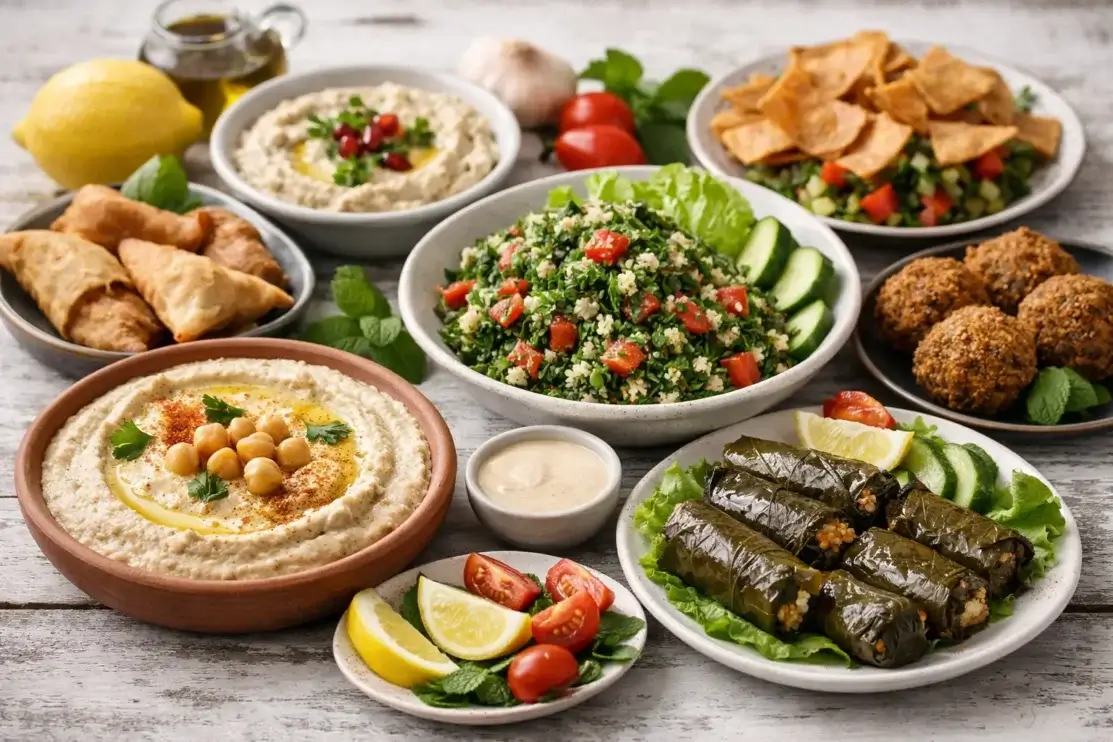
Some menus make vegan ordering feel like a negotiation. Lebanese food, at its best, does the opposite. The top vegan Lebanese menu items are not afterthoughts or modified sides. They are foundational dishes with deep roots, built on chickpeas, lentils, herbs, olive oil, lemon, eggplant, and warm spices that have always known how to carry a meal.
That matters if you want food that feels generous, satisfying, and genuinely nourishing. It matters even more if you also care about clean ingredients, allergy awareness, and the difference between a dish that simply skips meat and one that was meant to shine on its own.
What makes the top vegan Lebanese menu items so satisfying
Lebanese cooking understands balance. Rich tahini is lifted by lemon. Creamy chickpeas meet bright parsley. Slow-cooked onions bring sweetness to earthy lentils. Even the simplest plate tends to have contrast, which is why vegan Lebanese food rarely feels flat.
There is also a practical reason these dishes hold up so well. Many classic preparations are naturally plant-based, so the flavor structure is already complete. You are not relying on substitutions to create body or depth. Instead, you get dishes that were shaped over generations to be comforting, fresh, and full of character.
Still, not every restaurant approaches these foods with the same care. Preparation matters. A hummus made from properly cooked chickpeas and good tahini tastes entirely different from one pulled together for convenience. The same goes for falafel, grape leaves, and vegetable spreads. When ingredients are fresh and made from scratch, the meal feels lighter and more vivid.
12 top vegan Lebanese menu items worth ordering
Hummus
Hummus is often the first thing people order, and for good reason. When it is done well, it is silky, nutty, bright, and deeply comforting. The beauty of hummus is its restraint. Chickpeas, tahini, lemon, garlic, and olive oil do not need much dressing up.
If you are judging a Lebanese menu, hummus tells you a lot. It should taste clean and balanced, not overly acidic or weighed down by too much garlic. Pair it with fresh vegetables, gluten-free bread if available, or as part of a mezze spread.
Baba ghanoush
For diners who want something smokier and a little less familiar than hummus, baba ghanoush is one of the best choices on the table. Roasted eggplant brings depth, while tahini and lemon keep it creamy and bright.
Some versions are very smoky and rustic. Others are smoother and lighter. Neither is wrong. It depends on whether you want bold charred flavor or a softer, more delicate dip.
Falafel
Falafel is one of the most loved vegan Lebanese menu items because it delivers on texture. The outside should have a crisp edge, while the inside stays tender and herb-forward. Good falafel tastes of chickpeas, parsley, cilantro, onion, garlic, and spice – not just fryer oil.
This is also where ingredient quality matters. Freshly fried falafel has a completely different energy from dense, dry versions that sit too long. It can be a meal on its own, but it is even better with tahini, pickled vegetables, and a bright salad.
Mujadara
Mujadara is humble food in the best sense. Lentils and rice are cooked until tender, then topped with deeply caramelized onions that bring sweetness and richness. It is simple, filling, and quietly craveable.
If you usually think of vegan dishes as light but not substantial, mujadara may change your mind. It is hearty without feeling heavy, and it tends to satisfy in a steady, comforting way. Some places serve it as a side, but it often deserves center-of-the-plate status.
Warak enab, or stuffed grape leaves
Stuffed grape leaves are one of those dishes that feel delicate and generous at the same time. The leaves are wrapped around rice, herbs, and often tomato, lemon, and spices, then cooked until tender.
They can lean bright and citrusy or more savory depending on the kitchen. Either way, they work beautifully as part of a mezze meal. Just make sure you are ordering the vegan version, since some restaurants offer grape leaves with meat as well.
Tabbouleh
Tabbouleh brings freshness to the table in a way few salads can. Parsley is the real base, with tomato, mint, lemon, and olive oil creating the structure. In some versions, bulgur plays a small supporting role. In others, especially in gluten-free kitchens, the salad may be adapted.
That is worth noting for anyone with dietary restrictions. If you are avoiding gluten, tabbouleh is a dish to ask about rather than assume. The flavor profile is still one of the most refreshing on any Lebanese menu.
Fattoush
Fattoush is a chopped salad with brightness and crunch, usually built from lettuce, tomato, cucumber, radish, herbs, and a sharp, citrusy dressing. Traditional versions often include toasted or fried pita pieces, which give the salad its signature texture.
For gluten-free diners, that detail matters. A thoughtful kitchen may offer a version without pita or with a gluten-free alternative. Even with adjustments, fattoush can be one of the most vibrant ways to round out a richer spread.
Batata harra
If you like a little heat, batata harra deserves your attention. These potatoes are typically roasted or fried, then tossed with garlic, cilantro, olive oil, and chili. They are crisp, bold, and especially good when you want something warm and savory on the side.
The spice level can vary. Some kitchens keep it gentle, while others let the chili come forward. If you are ordering for a group, this is one of those dishes that tends to disappear quickly.
Ful medames
Ful medames is made from slow-cooked fava beans, usually seasoned with lemon, garlic, olive oil, and sometimes parsley or tomato. It is deeply traditional, satisfying, and often underrated next to more familiar mezze.
What makes it special is its earthiness. The texture is softer and more rustic than hummus, and the flavor is subtler at first bite. If you like dishes that feel grounding and nourishing, ful is worth seeking out.
Lentil soup
A well-made lentil soup can be one of the kindest things on a menu. Lebanese versions are often smooth, gently spiced, and finished with lemon, giving them both comfort and brightness.
This is a smart order when you want something warming but not too rich. It is also a reliable choice for diners who need simple, allergy-conscious options. The ingredient list is usually straightforward, but as always, it helps when the kitchen is transparent.
Cauliflower with tahini or lemon
Cauliflower shows up in many Mediterranean and Lebanese-inspired kitchens because it takes seasoning so well. Roasted or fried, it can be served with tahini sauce, lemon, herbs, or pomegranate.
The appeal here is contrast. You get crisp edges, tender centers, and a sauce that brings everything together. It is a great pick if you want a vegetable dish that still feels satisfying enough to hold its own.
Pickles, olives, and simple mezze plates
Not every standout item needs to be complicated. Lebanese meals often become more memorable through contrast and variety, and that is where pickled turnips, cucumbers, olives, and small mezze plates shine.
These supporting items sharpen the whole meal. They cut through richness, add texture, and make even a few dishes feel more complete. If you are building a table for sharing, they do more work than people expect.
How to order vegan Lebanese food with dietary needs in mind
If you are vegan and also gluten-free or managing allergies, Lebanese food can be wonderful, but it is still worth asking questions. Bulgur in tabbouleh, pita in fattoush, and cross-contact in fried foods can all matter depending on your needs.
This is where an intentional kitchen stands apart. Restaurants that build their menu around dietary inclusivity from the start tend to make ordering much easier and more reassuring. In Los Angeles, where many diners care as much about ingredient transparency as flavor, that kind of clarity is not a bonus. It is part of hospitality.
A fully gluten-free, soy-free, organic, and non-GMO kitchen like Levant Los Angeles offers a different experience from a restaurant trying to patch together accommodations at the last minute. You can focus more on what sounds delicious and less on what might be hidden in the details.
Building a balanced meal from top vegan Lebanese menu items
The best vegan Lebanese order usually mixes creamy, fresh, hearty, and bright elements. Hummus and baba ghanoush cover the creamy side. Tabbouleh or fattoush bring freshness. Mujadara or falafel add substance. Pickles, olives, or lemony grape leaves sharpen the edges.
That balance is what makes the cuisine feel so generous. You do not need a giant entree to leave satisfied. A few thoughtfully chosen dishes can create a meal that feels complete, colorful, and deeply comforting.
If you are ordering for a table, variety matters more than volume. Choose dishes with different temperatures, textures, and levels of richness. The meal becomes more enjoyable when every plate gives the next one a little more contrast.
The real pleasure of Lebanese food is that it does not ask you to choose between comfort and freshness. The right vegan dishes give you both, with enough depth to feel rooted and enough brightness to leave you feeling good after the meal. That is the kind of food people come back for.