
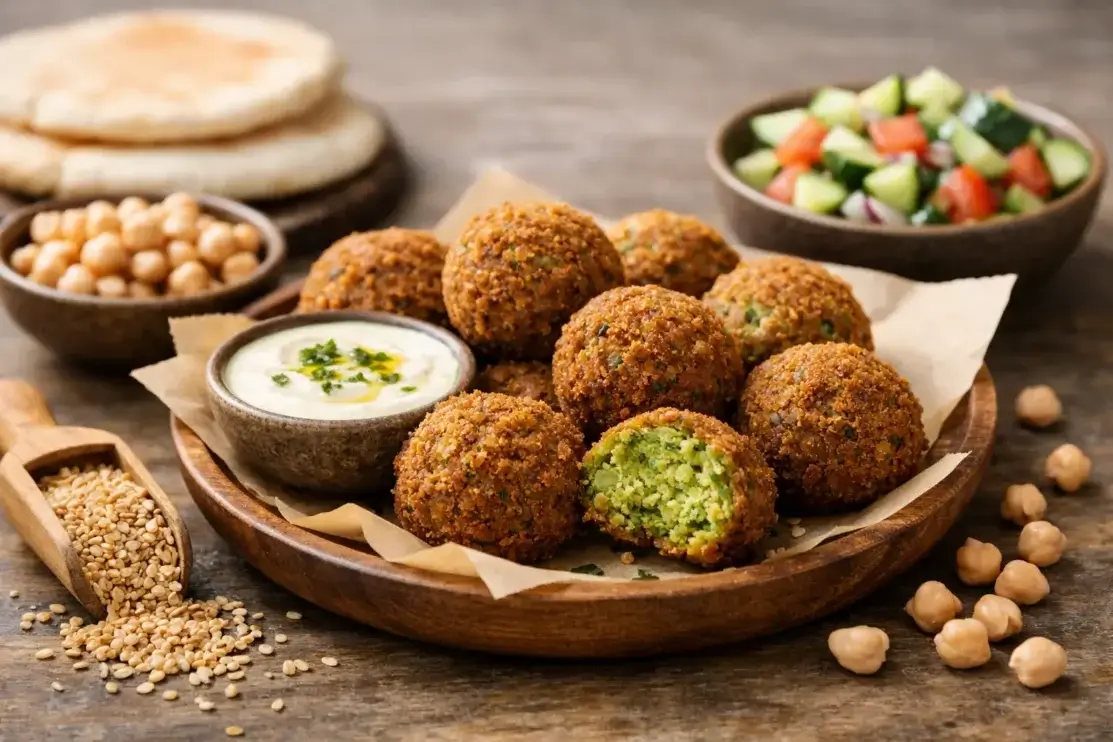
You order falafel because it sounds like the safe choice – chickpeas, herbs, spices, done. But if you eat gluten free, you already know the real question is never just what a dish is supposed to be. It is how it is actually made. So, is falafel gluten free? Often, yes. Always, no.
Traditional falafel is typically made from chickpeas or fava beans blended with herbs, onion, garlic, and spices, then formed into patties or balls and fried. Those core ingredients are naturally gluten free. The problem starts when recipes change, shortcuts get added, or the cooking process introduces cross-contact.
Is falafel gluten free in its traditional form?
At its most traditional, falafel should be gluten free. Dried chickpeas, parsley, cilantro, cumin, coriander, garlic, onion, and salt do not contain gluten. If the mixture is held together properly and fried in a dedicated gluten-free fryer, the falafel itself can be a naturally gluten-free food.
That said, restaurant falafel is not one fixed recipe. Some kitchens add flour or breadcrumbs to help with texture, binding, or consistency. Others use pre-made mixes that include wheat. Even when the ingredient list looks clean, falafel can still become unsafe if it is fried in the same oil as breaded foods.
This is why the answer depends less on the name of the dish and more on the details behind it.
What makes falafel not gluten free?
There are three common reasons falafel may contain gluten.
The first is fillers. Some cooks add wheat flour, all-purpose flour, or breadcrumbs to prevent the falafel from falling apart. It is a practical choice in many kitchens, but not a safe one for someone with celiac disease or gluten sensitivity.
The second is packaged mixes. Pre-made falafel blends can be convenient, especially in high-volume settings, but convenience often comes with stabilizers or wheat-based ingredients. Unless a mix is specifically labeled gluten free, it should not be assumed safe.
The third is cross-contact. This is the issue many people miss. A falafel mixture may be gluten free on paper, but if it shares prep surfaces, utensils, or fryer oil with breaded chicken, pita chips, or other wheat-containing foods, that changes the equation.
For people avoiding gluten by preference, a small amount of cross-contact may or may not matter. For people with celiac disease or a serious sensitivity, it matters a great deal.
How to tell if falafel is truly gluten free
If you are eating out, the best approach is to ask a few very specific questions. General questions like “Is this gluten free?” do not always lead to a clear answer. A server may know the dish has no bread in it and say yes, without knowing whether flour is added or fryer oil is shared.
A better question is whether the falafel contains any wheat flour or breadcrumbs. After that, ask whether it is fried in a dedicated fryer. If the answer is uncertain, it is worth being cautious.
Ingredient transparency matters here. Restaurants that make food from scratch and understand dietary needs are usually more prepared to answer clearly. That kind of clarity builds trust, especially for diners who cannot afford to guess.
Is baked falafel gluten free?
Baked falafel can be gluten free, but baking alone does not guarantee anything. The same concerns still apply: what is in the mixture, and how is it handled in the kitchen?
Some baked falafel recipes rely on flour for structure because they are trying to avoid the crisp exterior that frying naturally creates. Others stay true to the classic ingredient list and work beautifully without gluten. So if you see baked falafel on a menu or in a grocery store, check the ingredient list rather than assuming it is safer.
Is falafel gluten free at restaurants?
This is where the answer becomes most conditional. In some restaurants, falafel is one of the more gluten-friendly choices on the menu. In others, it is not safe at all.
Mediterranean restaurants often serve falafel alongside obvious wheat-based items like pita, wraps, tabbouleh made with bulgur, and breaded sides. That does not mean the falafel itself contains gluten, but it does increase the chance of shared surfaces and fryer oil.
A restaurant that is intentionally designed around gluten-free cooking offers a different level of reassurance. When ingredient sourcing, prep standards, and kitchen systems all support dietary safety, guests do not have to negotiate every bite. That peace of mind matters just as much as the flavor.
Store-bought falafel can be tricky
Frozen falafel, refrigerated falafel, and boxed falafel mix vary widely. Some are made with simple whole-food ingredients. Others include wheat flour, modified food starch, or vague seasoning blends that require a closer look.
The label is your best guide, but even labels have limits. “No gluten ingredients” is not the same as certified gluten free. If you are highly sensitive, you may want products made in dedicated facilities or with clear allergen protocols.
Texture can also be a clue. Very soft or uniform falafel sometimes relies on added binders, though that is not always the case. The safest habit is still the simplest one: read the full ingredient panel and allergen statement every time.
What about the rest of the falafel plate?
Even when the falafel is gluten free, the full meal may not be. This is one of the easiest ways gluten sneaks in.
Pita is the obvious issue, but it is not the only one. Tabbouleh is traditionally made with bulgur, which contains gluten. Some sauces can contain hidden thickeners. Fried sides may share oil. Grain bowls may be built on couscous rather than rice. And a garnish added without much thought can turn a safe dish into an unsafe one.
If you are ordering a falafel plate, bowl, or wrap, look at every component. Falafel over greens with tahini and vegetables may be naturally gluten free. The same falafel tucked into pita with a side of tabbouleh is not.
Why homemade falafel can be the safest option
Making falafel at home gives you control over ingredients and preparation, which is often the simplest path for gluten-free eaters. You can use dried chickpeas, fresh herbs, spices, onion, and garlic, then bind the mixture without wheat.
Many home cooks find that traditional falafel does not need flour if the chickpeas are soaked properly rather than cooked from a can. The texture holds together better, and the flavor is fresher too. If you do need extra binding, gluten-free chickpea flour can work well without changing the character of the dish.
Cooking method matters, but less than the ingredient list. You can fry, bake, or air fry falafel and still keep it gluten free, as long as your kitchen tools and oil are not contaminated by wheat-based foods.
A quick note for people with celiac disease
If you have celiac disease, “probably gluten free” is not enough. Falafel may look simple, but simple foods are often prepared in complicated kitchens.
Ask direct questions. Let the restaurant know this is a medical need, not just a preference. If the staff seems unsure, rushed, or unable to explain ingredients and fryer practices, that is useful information. The safest choice is often the place that has already built gluten-free care into how it cooks every day.
For many diners, that kind of environment changes the whole experience. You stop feeling like you are making special requests and start feeling like you are being genuinely taken care of.
So, is falafel gluten free?
Most often, falafel can be gluten free because its core ingredients are naturally free from gluten. But whether it is safe to eat depends on the recipe, the kitchen, and the company it keeps on the plate.
If flour or breadcrumbs are added, it is not gluten free. If fryer oil is shared, it may not be safe for sensitive diners. If the falafel is carefully made from scratch with clean ingredients and thoughtful preparation, it can be one of the most satisfying gluten-free foods on a Mediterranean menu.
At Levant Los Angeles, this kind of question is never treated as an inconvenience. It is part of how hospitality should feel – clear, caring, and rooted in trust. When food is made with intention, everyone gets to enjoy the comfort of a meal without second-guessing it.
The next time falafel is on the menu, do not just ask what it is. Ask how it is made. That is where the real answer lives.